How Automated Trading is Transforming Financial Markets
Cryptocurrency Market Security and Ethics
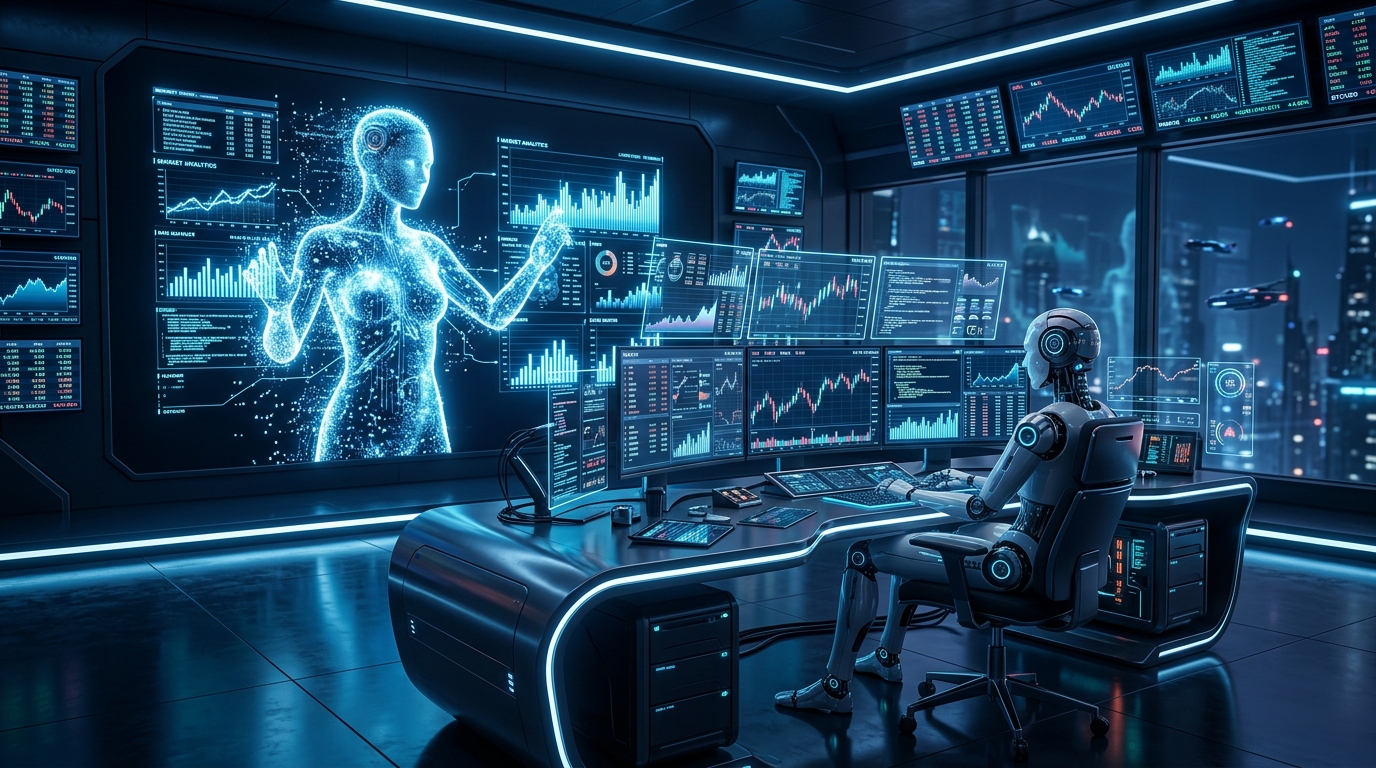
The rise of automation within financial markets is fundamentally altering trading practices. Originating from algorithmic trading, the evolution into intricate machine-learning models has made automated trading systems indispensable for both institutional and retail traders. This article delves into how automation is reshaping financial markets, highlighting key technologies, strategies, advantages, challenges, and the ethical implications of this transformation.
An Overview of Automated Trading
Automated trading involves leveraging computer systems to carry out trades based on predefined algorithms, eliminating the need for human intervention. These systems scrutinise market data instantaneously, executing decisions with a precision and speed that far surpasses human capabilities. The journey of automated trading began in the late 1970s with basic rule-based frameworks, which have since progressed into advanced platforms that integrate artificial intelligence (AI) and machine learning technologies.
Technological Innovations in Automated Trading
The evolution of automated trading has been significantly influenced by advancements in technology. Artificial intelligence and machine learning empower trading platforms to continuously learn and refine their approaches, detecting trends and enhancing strategies. High-frequency trading (HFT) techniques, which can perform numerous trades within mere seconds, have transformed the landscape by capitalising on tiny price variations. Additionally, the emergence of cloud computing, extensive data analysis, and upgraded network systems have allowed traders to implement these algorithms worldwide, engaging with financial markets around the clock with minimal delay.
The Mechanics of Automated Trading Systems
Automated trading systems operate through algorithms—comprehensive sets of rules and directives programmed in various coding languages. These systems vary from straightforward rule-based tactics, such as purchasing when a stock reaches a specific threshold, to sophisticated AI-driven frameworks that analyse past performance to forecast upcoming price changes.
Categories of automated trading systems encompass:
- Rule-Based Systems: Carry out trades based on explicit, predefined conditions.
- AI-Enhanced Solutions: Evolve continuously, enhancing capabilities by scrutinising extensive data collections.
- Integrated Systems: Merge traditional rule-based approaches with intelligent learning for superior outcomes.
- blog_three_question_4.subtitle_4: blog_three_question_4.desc_4
Varieties of Automated Trading Approaches
Each approach is founded on advanced algorithms and necessitates meticulous tuning and risk assessment.
Automated trading employs various strategies tailored to current market dynamics and investment objectives. Some notable examples are:
- Arbitrage Tactics: These tactics capitalise on discrepancies in prices between different markets or exchanges.
- Momentum Trading Approaches: These approaches aim to ride the wave of market trends, purchasing as prices ascend and liquidating as they descend.
- Mean Reversion Techniques: Leverage the expectation that asset prices will return to their average levels following sharp fluctuations.
- Liquidity Provision Techniques: Gain from the difference between buying and selling prices by executing simultaneous orders.
Advantages of Automated Trading Systems
In the bustling realm of digital finance, the advent of cryptocurrency trading has unveiled a plethora of opportunities for savvy investors. At the forefront of this revolution is Vale Vaultshire, a platform designed to empower individuals in their quest for financial independence. Imagine being able to trade assets that operate beyond traditional banking systems, where transactions occur at lightning speed and fees are minimal. With Vale Vaultshire, traders can delve into a diverse array of cryptocurrencies, each offering unique advantages and potential for growth. This dynamic marketplace allows users to capitalise on market fluctuations, turning volatility into profit with astute strategies and timely decisions. The platform’s user-friendly interface ensures that both novices and seasoned traders can navigate the complexities of the crypto landscape with ease. Moreover, the robust security measures in place provide peace of mind, allowing investors to focus solely on their trading ambitions. With comprehensive educational resources and a supportive community, Vale Vaultshire fosters an environment where every trader can thrive. As you embark on this exhilarating journey, the possibilities are limitless, and your financial future may well be brighter than ever before.
Automated trading systems present numerous benefits compared to traditional methods. Notable advantages include:
- Speed and Precision: Advanced algorithms can execute trades with remarkable speed, seizing market opportunities that might otherwise be lost.
- Minimisation of Human Error: Automated trading solutions remove the influence of emotions and biases, fostering more reliable trading outcomes.
- Round-the-Clock Market Availability: These innovative systems function non-stop, guaranteeing that traders are always poised to exploit market fluctuations.
- Strategy Testing and Fine-Tuning: Traders can refine their strategies by simulating them against past market data, enhancing effectiveness while reducing exposure to potential losses.
Hazards and Obstacles of Automated Trading
In the bustling realm of digital finance, where opportunities emerge with each passing moment, Vale Vaultshire stands as a beacon for those seeking to navigate the intricate world of cryptocurrency trading. Picture a vibrant marketplace, teeming with potential, where astute traders harness the power of advanced technology and insightful analytics. With Vale Vaultshire, individuals are not merely participants; they become architects of their financial futures. The platform offers an array of tools designed to empower users, from real-time market data to sophisticated trading algorithms that adapt to shifting trends. This dynamic environment fosters not only growth but also a sense of community among traders who share insights and strategies. Imagine the thrill of watching investments flourish, driven by informed decisions and strategic foresight. As the crypto landscape evolves, Vale Vaultshire ensures that its users remain at the forefront, equipped with the knowledge and resources necessary to seize lucrative opportunities. In this digital age, where every second counts, embracing the benefits of crypto trading through Vale Vaultshire could very well be the key to unlocking unparalleled financial success.
Although automated trading brings numerous advantages, it also presents certain hazards. Notable challenges include:
- Fluctuations in Market Stability: Automated trading systems can heighten market instability, particularly during unexpected downturns or sudden sell-offs, where swift and massive liquidations may spiral beyond control.
- Sudden Market Declines: For instance, in 2010, an event triggered by algorithms caused a steep market drop, erasing billions in mere moments.
- Systemic Errors: Technical glitches, service interruptions, or flaws in programming can lead to considerable financial repercussions.
- blog_three_question_7.subtitle_4: blog_three_question_7.desc_4
The Influence of Automated Trading on International Financial Markets
The rise of automated trading has transformed market dynamics, enhancing liquidity and operational efficiency. With trades executed at unprecedented speeds, the overall fluidity across diverse asset classes has notably improved. Yet, this shift signals a decline in traditional human roles, as algorithms increasingly undertake responsibilities that were once the domain of human traders, thereby redefining the financial employment landscape.
Automated Trading Across Various Markets
Automated trading mechanisms exhibit remarkable adaptability, functioning across multiple sectors, such as:
- Equities: Trading algorithms for stocks are among the most sophisticated, widely employed by both institutional investors and retail traders.
- Forex: Automated trading technologies have revolutionised the foreign exchange landscape, allowing for swift adjustments in response to global developments and economic indicators.
- Commodities: From precious metals to energy sources, the commodities sector thrives on automated strategies that leverage market trends and arbitrage opportunities.
- Cryptocurrencies: The cryptocurrency landscape, characterised by its inherent volatility and round-the-clock trading, is ideally suited for automated systems that can swiftly adapt to market fluctuations.
Regulatory Challenges and Considerations
The regulation of automated trading is essential for maintaining market integrity. Regulatory authorities such as the FCA and PRA are tasked with establishing guidelines to mitigate risks and promote transparency. Yet, as AI technologies evolve, these regulators encounter difficulties in keeping pace with rapid advancements. Additionally, ethical dilemmas emerge, particularly regarding the potential for algorithmic manipulation of market dynamics.
How Institutional Investors Utilise Automated Trading
Institutional investors, especially hedge funds and proprietary trading firms, increasingly depend on automated trading solutions to secure competitive advantages. Quantitative analysts, known as 'quants,' create intricate models that harness vast datasets, artificial intelligence, and machine learning to surpass conventional trading techniques. A notable example includes the remarkable success experienced by hedge funds leveraging automated systems, akin to the Medallion Fund from Renaissance Technologies.
Automated Trading for Individual Investors
Recent innovations have made automated trading accessible to individual investors. Platforms like cTrader and IG Markets provide straightforward access to trading bots, while social trading networks enable users to replicate the strategies of successful traders. Furthermore, individual traders can either buy or design bespoke trading bots to streamline their trading approaches.
The Prospects of Automated Trading
As artificial intelligence and machine learning progress, the complexity of automated trading mechanisms will also advance. The nascent field of quantum computing promises to transform trading by enabling the analysis of vast data sets at unprecedented speeds. In the coming decade, we anticipate that automation will increasingly influence various facets of financial markets, thereby minimising the reliance on human traders.
Ethical Implications of Automated Trading
Transparency is essential to maintain fairness and accessibility within automated trading environments. It is imperative that algorithms are crafted to avert market manipulation and guarantee equal opportunities in the marketplace. Striking a balance between the advantages of automation and the necessity for ethical conduct in trading remains a persistent challenge for both regulators and participants.
Examining Automated Trading Case Studies
- 2010 Flash Crash: This incident underscored the inherent risks associated with automated trading systems, as algorithms initiated sweeping sell-offs that led to a dramatic market decline within mere minutes.
- Tales of Triumph: Investment firms such as Winton Group and AHL have harnessed the power of automation, consistently surpassing market expectations and redefining industry standards.
Common Inquiries (FAQs)
- 1. What is algorithmic trading? Algorithmic trading involves using computer algorithms to carry out trades autonomously, minimising human involvement.
- 2. What distinguishes high-frequency trading from traditional trading? High-frequency trading entails the rapid execution of numerous trades within seconds, leveraging minor fluctuations in prices for profit.
- 3. Is automated trading devoid of risks? Certainly not; although automated trading mitigates human errors, it remains susceptible to risks like technical malfunctions and market unpredictability.
- 4. Can individual investors engage in automated trading? Absolutely, various platforms empower individual investors to develop or utilise automated trading techniques.
- 5. How do authorities oversee automated trading activities? Regulatory authorities employ a diverse array of oversight mechanisms, encompassing real-time monitoring systems alongside structured regulatory frameworks.
- 6. Which technologies play a vital role in automated trading? Essential technologies comprise artificial intelligence, machine learning, cloud infrastructure, and high-speed connectivity.
Conclusion: The Transforming Landscape of Financial Markets through Automation
Automated trading is reshaping financial markets, enhancing efficiency, accelerating trade execution, and enabling advanced strategies. As AI, machine learning, and quantum computing progress, the future of automated trading will hinge on its capacity to innovate while upholding market integrity.